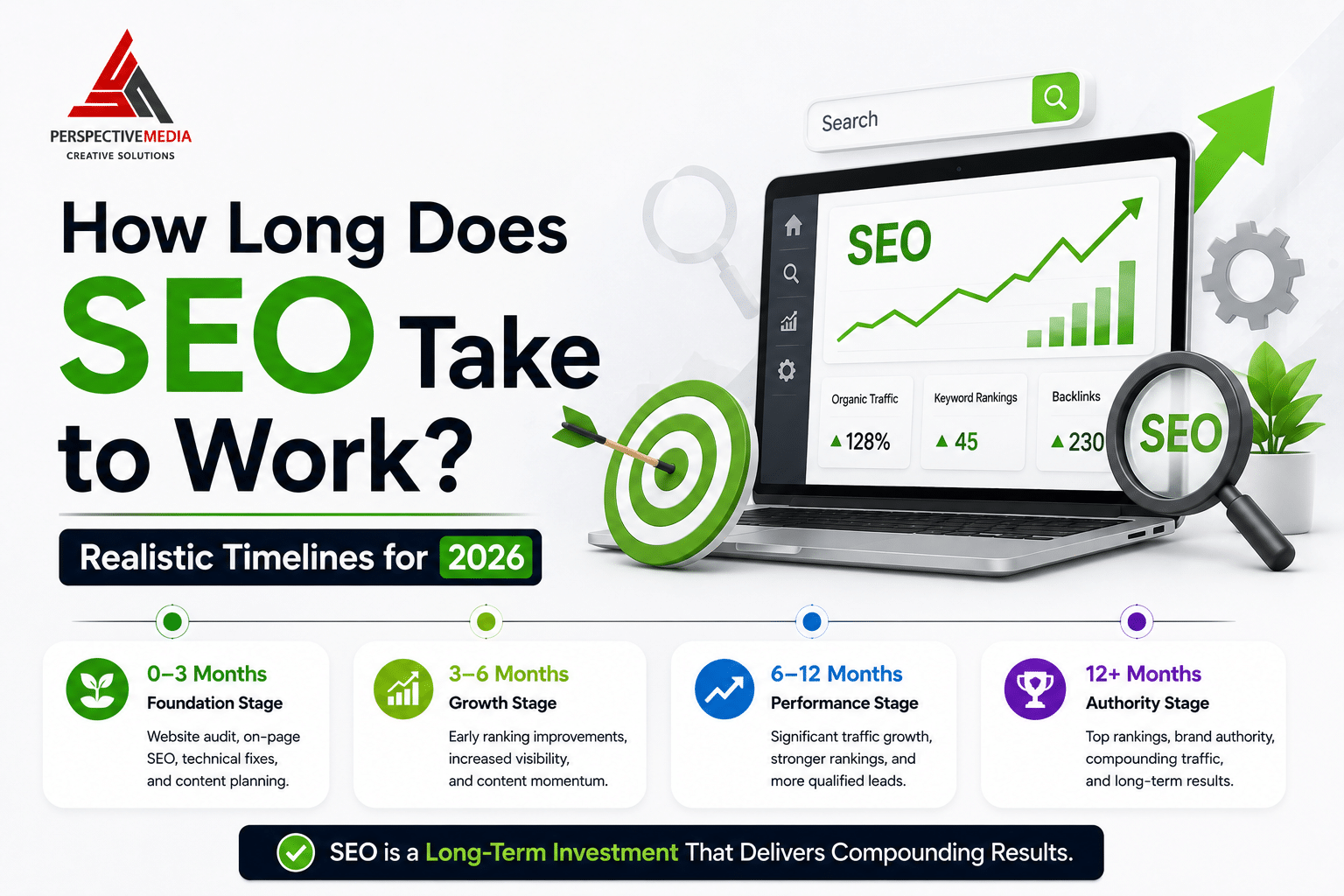
“How long does SEO take?” is one of the most common questions we get—and one of the most honestly answered questions in digital marketing. The truth is, it depends. But there are clear patterns that let us give you realistic expectations.
Here’s what you can actually expect, broken down month by month.
The Short Answer
For most businesses in competitive US markets, expect:
- Months 1–2: Technical fixes, foundation work, no visible ranking movement
- Months 3–4: Early ranking improvements for low-competition keywords
- Months 5–6: Noticeable organic traffic growth begins
- Months 6–12: Significant ranking gains and measurable lead generation
- Month 12+: Compounding growth as authority builds
If someone promises significant results in 30 days, be very skeptical.
Why Does SEO Take This Long?
Three main reasons:
1. Google needs to crawl and index your changes: When you optimize a page or publish new content, Google has to find it, crawl it, evaluate it, and decide where it belongs in rankings. This process takes weeks, sometimes months — especially for newer domains.
2. Authority takes time to build: Links from other reputable websites are one of Google’s strongest ranking signals. Earning quality links is not instant — it happens through outreach, PR, great content, and time.
3. Google tests ranking positions: Google doesn’t immediately move a page to its “final” ranking position. It tests your content at various positions, monitors how users interact with it, and adjusts rankings based on that data over time.
Month-by-Month Breakdown
Months 1–2: Foundation
- Technical audit and fixes (site speed, crawlability, schema, indexation)
- Keyword research and content strategy
- On-page optimization of existing key pages
- Google Search Console setup and monitoring
What to expect: Little to no visible ranking movement. This is normal — the foundation is being built.
Months 3–4: Early Movement
- New content goes live
- Early rankings appear for long-tail and low-competition keywords
- Google starts recognising the site’s topical focus
What to expect: Some keyword rankings appear in positions 10–30. Traffic begins a small but visible upward trend.
Months 5–6: Momentum Builds
- Target keywords start moving into page one (positions 8–15)
- Organic traffic shows clear growth
- The first organic leads start coming in
What to expect: Measurable increase in organic traffic. First real organic inquiries or conversions.
Months 7–12: Compounding Growth
- Primary keywords reach positions 1–5 in lower-competition segments
- Traffic and leads grow month over month
- Domain authority increases with consistent link acquisition
What to expect: Regular organic lead flow. Reduction in dependency on paid ads for those keyword areas.
Factors That Affect How Fast SEO Works
Domain age and history: Older domains with clean histories rank faster than brand-new ones.
Competition level: Ranking for “digital marketing agency” nationally takes far longer than “Google Ads management for HVAC companies.”
Content quality and depth: Thin, generic content takes longer to rank (and often doesn’t). Comprehensive, expert-level content moves faster.
Budget and execution speed: More investment means more content, more links, and faster technical fixes, which means faster results.
Starting point: A site with major technical issues, zero backlinks, and thin content takes longer than one that just needs optimization.
Is SEO Still Worth It in 2026?
Absolutely — and arguably more than ever. Here’s why:
- Google Ads costs continue to rise in competitive industries
- AI search features (Google AI Overviews, Perplexity, ChatGPT Search) pull heavily from organically authoritative content
- Organic results still receive the majority of clicks for most informational and commercial searches
- The compounding nature of SEO means that the investment you make today pays dividends for years
The businesses that started investing in SEO 12 months ago are now capturing organic leads that their competitors are still paying for with ads.
The Bottom Line
SEO is a 6–12 month commitment before you see full results—but the returns compound over time in a way that paid advertising never can.
The key is starting with a realistic plan, measuring the right metrics, and working with a team that prioritizes actual business outcomes over vanity rankings.
At Perspective Media, we build SEO strategies designed for long-term growth — technical foundation, content authority, and link building working together. We report on revenue and leads, not just keyword positions.
Want a realistic SEO growth projection for your business? Get a free audit →